5G Networks Spark Real-Time Hybrid Gaming Experiments in Remote Global Outposts
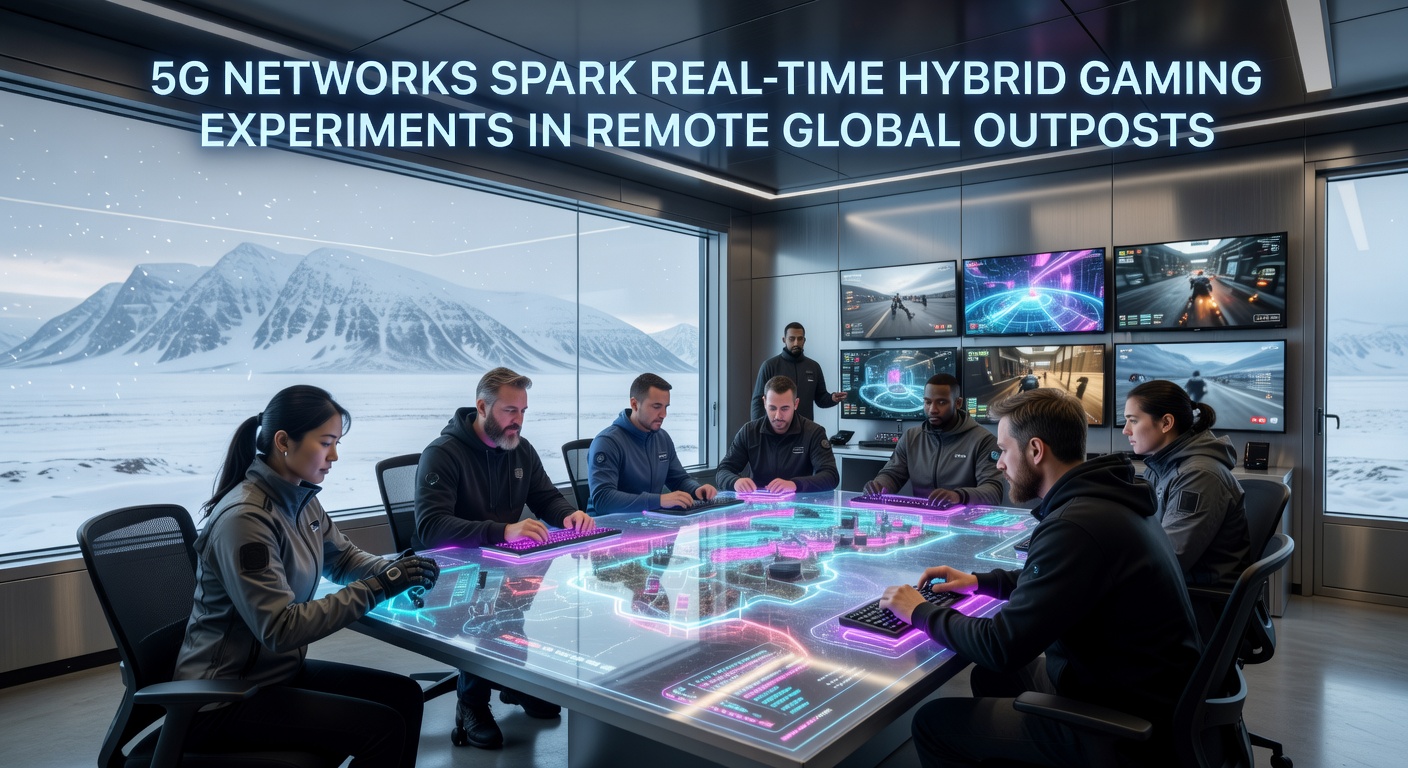
Remote outposts around the world have started running real-time hybrid gaming trials over 5G infrastructure since early 2026, and the May rollout at several scientific bases marked a clear shift toward integrated local-cloud gameplay. Teams in Antarctica, northern Canada, and isolated Pacific research stations now connect gaming rigs that blend on-site servers with distant cloud resources while latency stays under 20 milliseconds according to tests from the International Telecommunication Union.
How 5G Changes Connectivity at the Edge
Traditional satellite links in these locations often deliver 600-millisecond delays that break competitive play, yet 5G small cells paired with low-earth-orbit relays cut that figure dramatically. Data from the GSMA 2026 connectivity report shows average round-trip times dropping to 12-18 milliseconds during multiplayer sessions, and the same networks simultaneously support scientific data uploads without interruption. Observers note that operators deploy edge computing nodes inside the outposts themselves so game state processing happens locally while cloud instances handle larger world simulations.
Hybrid Gaming Architecture in Practice
Hybrid systems split workloads between local hardware and remote servers, which keeps visual fidelity high even when bandwidth fluctuates. At the Australian Antarctic Division's Davis Station, for example, participants run a custom engine that caches core assets on-site while streaming dynamic elements through 5G slices reserved for gaming traffic. Researchers discovered this approach maintains 60 frames per second during peak hours and prevents desync issues that previously ended sessions after a few minutes. Similar setups operate at Canada's Eureka research facility where teams test cross-platform sessions between console users on base and remote players back in southern cities.
What's interesting is how network slicing allocates guaranteed bandwidth for gaming without starving environmental monitoring equipment, and operators achieve this balance through priority queues defined in 3GPP Release 18 standards. Figures from a University of Oslo study released in spring 2026 confirm that packet loss stayed below 0.1 percent across 48-hour test windows, and jitter remained under 4 milliseconds even during strong winds that typically disrupt older microwave links.
Case Examples Across Regions
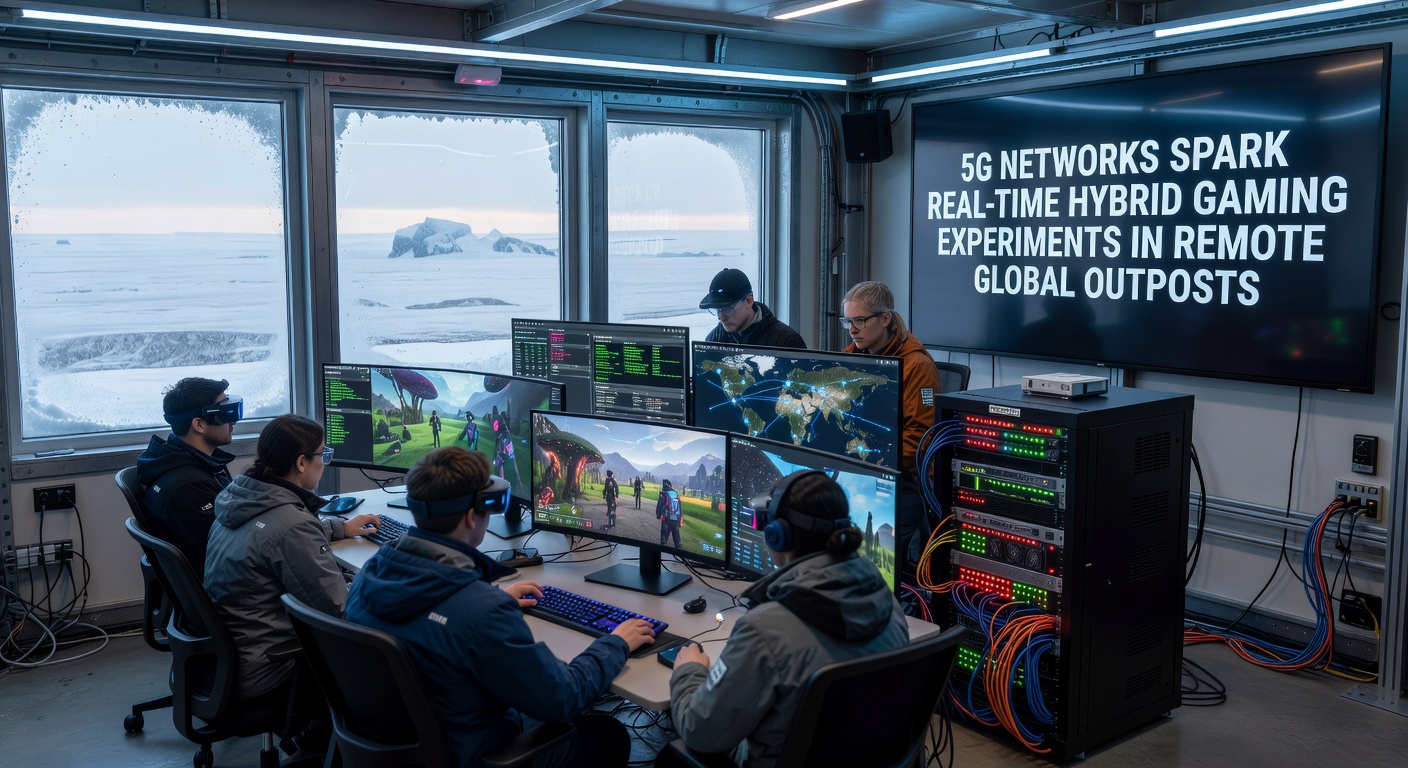
One study revealed successful trials at the Norwegian Troll Station in Queen Maud Land where scientists played cooperative survival games during downtime periods. The setup used a private 5G network covering the main habitation module and extended coverage to outdoor workspaces through directional antennas. Participants reported seamless transitions between local and cloud-rendered environments, and session logs showed continuous play lasting over four hours without reconnection events.
At remote Amazon river research camps managed by Brazilian agencies, portable 5G kits powered by solar arrays now support augmented-reality overlays during field training exercises. Data indicates these kits deliver stable connections across 2-kilometer radii, allowing multiple users to share real-time mapping data alongside recreational gameplay. The same infrastructure later expanded to nearby indigenous community centers for educational gaming programs.
Technical Hurdles and Measured Solutions
Power consumption remains a constraint in off-grid locations, and engineers addressed it by optimizing 5G radio units for burst-mode operation that activates only during active gaming windows. Temperature extremes in polar regions required custom enclosures rated to minus 50 degrees Celsius, and field reports confirm these units maintained signal integrity without additional heating beyond standard insulation. Interference from scientific radar equipment posed another challenge, yet frequency coordination protocols developed by the U.S. Federal Communications Commission helped allocate clean spectrum blocks for the gaming slices.
Security protocols follow zero-trust models that isolate gaming traffic from operational networks, and encryption overhead adds less than 2 milliseconds to latency according to measurements taken during the May 2026 campaigns. Those who've studied these deployments note that firmware updates arrive through the same 5G backhaul, which reduces reliance on physical supply flights.
Broader Implications for Isolated Communities
Remote outposts function as living laboratories for technologies that later reach rural settlements, and early results suggest 5G hybrid gaming could support mental health programs through structured multiplayer activities. Evidence from the Canadian Space Agency's related habitat simulations shows participants maintained higher engagement levels when recreational gaming access remained consistent. Industry organizations such as the Wireless Broadband Alliance have begun cataloging best practices from these experiments for wider distribution.
Conclusion
5G deployments continue expanding across previously unreachable sites, and hybrid gaming experiments provide concrete data on latency, reliability, and power efficiency. The patterns emerging from Antarctic bases, Arctic stations, and tropical research camps indicate that real-time interactive entertainment can coexist with critical scientific operations when networks receive proper segmentation. Future phases planned for late 2026 will test larger participant groups and more demanding titles while maintaining the same performance thresholds already achieved.