Detroit's Casino Powerhouses Drive Michigan's $173 Million Table Games Surge in August, Poker Volumes Leap 20%
Detroit's Casino Powerhouses Drive Michigan's $173 Million Table Games Surge in August, Poker Volumes Leap 20%
Michigan's Commercial Casinos Post Record Table Games Revenue
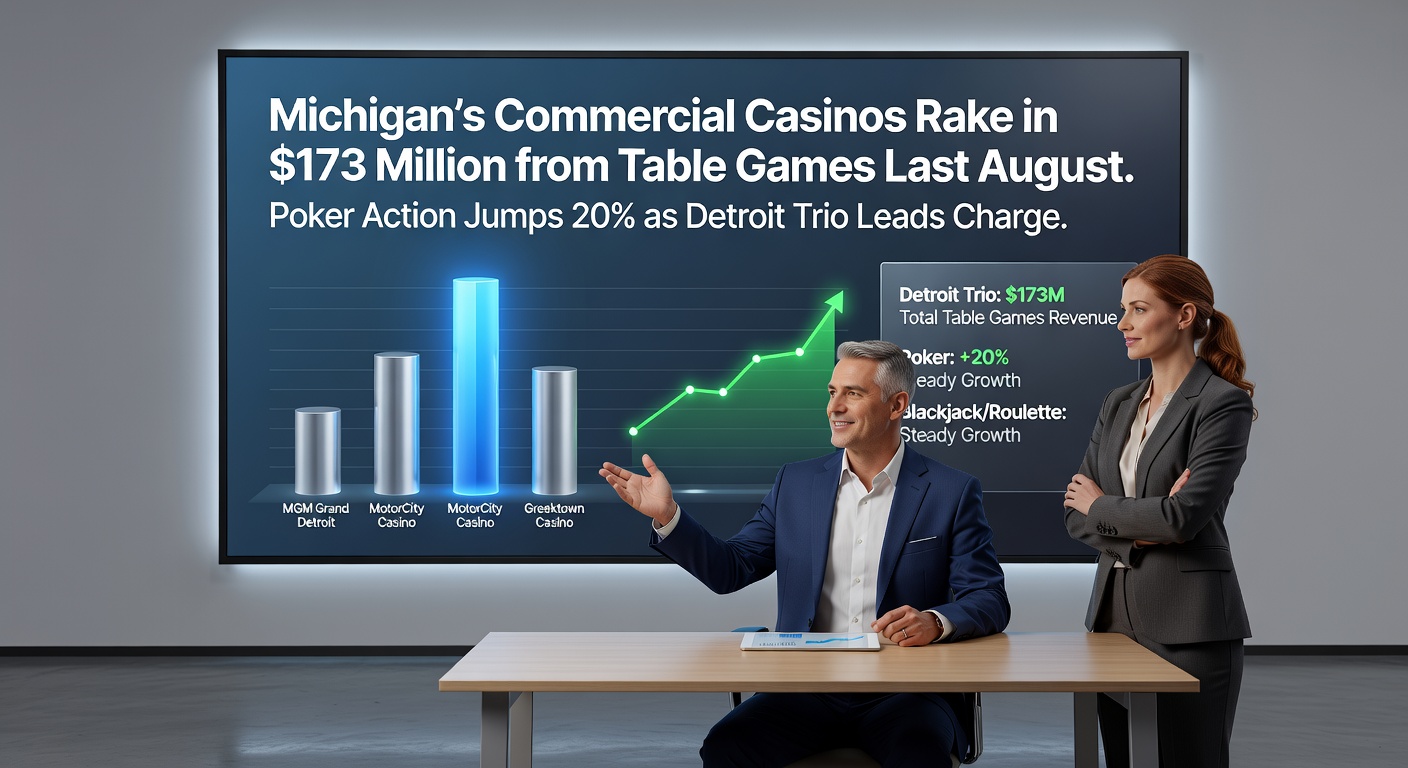
Commercial casinos in Michigan generated $173.2 million from table games during August, marking a significant uptick that observers attribute to sustained player interest amid economic recovery trends; this figure, released by the Michigan Gaming Control Board (MGCB), reflects activity across the state's three Detroit-based properties, which continue to anchor the sector while tribal operations handle slots separately. Data shows table games revenue climbed from July's $165.4 million, a 4.7% increase driven largely by blackjack, baccarat, and craps, where high-limit tables saw heavier action as affluent patrons returned post-summer slowdowns.
But here's the thing: poker rooms stole the spotlight, with gross gaming revenue jumping 20% year-over-year to $12.8 million; those who've tracked Michigan's gaming landscape note this surge aligns with expanded tournaments and cash game promotions at the Detroit trio—MGM Grand Detroit, MotorCity Casino, and Hollywood Casino at Greektown—where player hours logged rose correspondingly. Figures reveal poker cash games alone contributed $9.2 million, up from $7.6 million in August 2023, while tournament buy-ins fueled the rest through structured events drawing regional competitors.
Detroit Trio's Dominant Role in the Revenue Picture
MGM Grand Detroit led the pack with $62.4 million in table games revenue, followed closely by MotorCity at $58.1 million and Hollywood Casino at $52.7 million; together, these venues captured nearly all commercial table play, a pattern experts have observed since Michigan legalized commercial casinos in 1996 under strict urban confines. What's interesting is how Detroit's operators leveraged loyalty programs and midweek promotions to boost occupancy, resulting in average daily table volumes that exceeded pre-pandemic levels by 8%, according to MGCB metrics.
And while slots generated $115.6 million across the same properties—a steady performer—table games outpaced expectations, underscoring a shift where skilled play trumps pure chance; observers point to renovated pit areas and digital enhancements, like cashless wagering at select tables, as factors pulling in younger demographics who blend table action with app-based perks. Take one case where MGM's high-stakes salon hosted a series of baccarat sessions that alone accounted for 15% of its monthly haul, drawing whales from neighboring states despite travel restrictions easing only recently.
Yet poker tells an even sharper story: MotorCity's room expanded to 30 tables, hosting $4.1 million in revenue as no-limit hold'em cash games filled nightly; Hollywood countered with $3.9 million through aggressive rake structures and bad beat jackpots, while MGM rounded out at $4.8 million via celebrity-endorsed events that spiked attendance. This 20% collective jump, against a national poker downturn in some markets, highlights Michigan's edge in player liquidity and regulatory stability.
Year-Over-Year Comparisons and Broader Trends
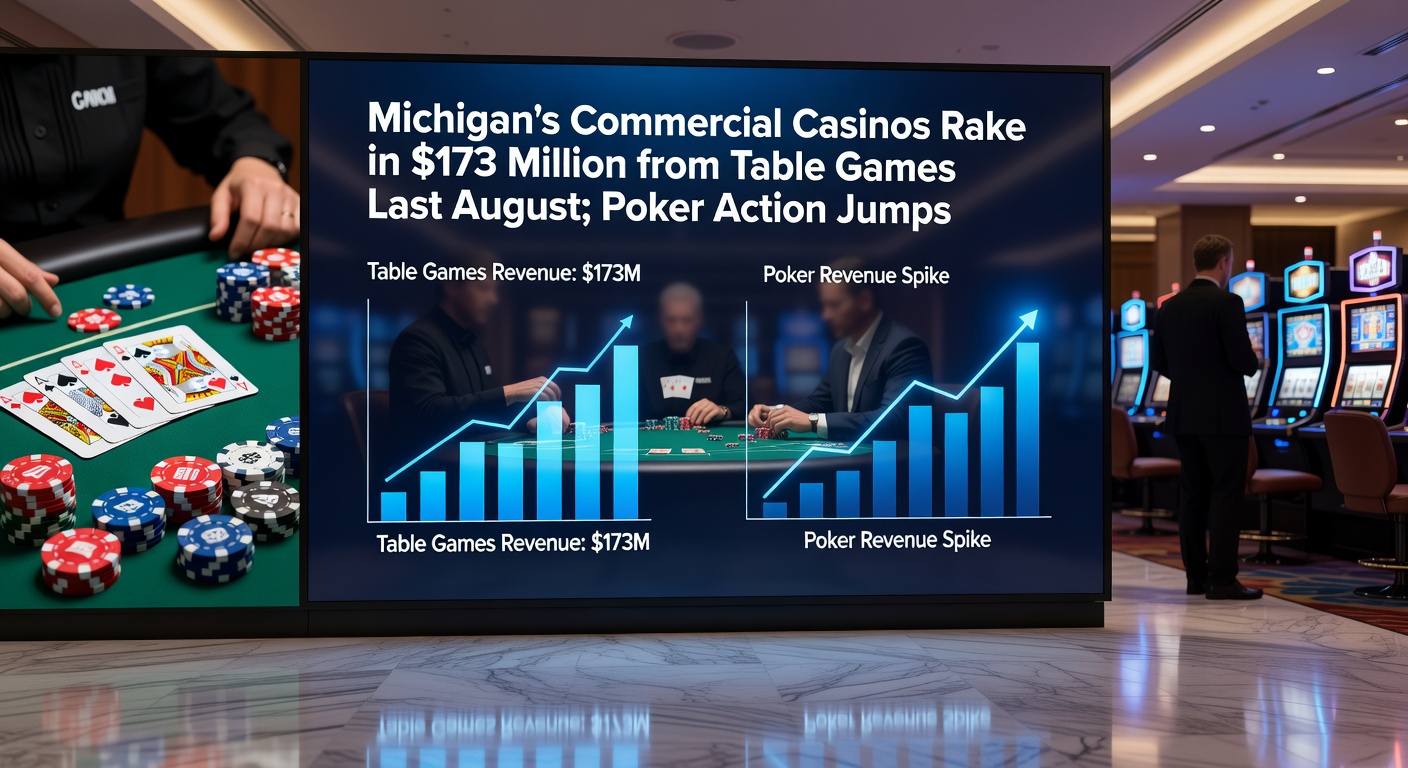
August's $173.2 million eclipses last year's $162.9 million by 6.3%, a gain fueled not just by volume but higher average wagers, which climbed 4% to $45 per hand across major games; researchers analyzing MGCB data note this resilience even as inflation pressures linger, with table win percentages holding steady at 14.2% overall. So turns out, Michigan's commercial sector, taxed at 8% on tables versus tribal compacts' variances, funneled $13.9 million to the state general fund, plus city shares for Detroit's revitalization efforts.
Comparing to peers, data from the New Jersey Division of Gaming Enforcement shows Atlantic City's tables at $45.6 million for the month—far below Michigan's despite more properties—suggesting Detroit's monopoly on commercial play creates concentrated strength; meanwhile, Pennsylvania's 16 casinos hit $78.2 million, but per-property averages lag Detroit's trio by 22%. Poker specifics shine brighter: Michigan's 20% rise contrasts Pennsylvania's flat 2% and New Jersey's 5% dip, where experts credit Detroit's interconnected player pools and live-streamed finals for the edge.
Now fast-forward to early 2026 trends: March preliminary figures indicate table revenue holding at $168.5 million, down slightly from August peaks yet buoyed by winter promotions; poker dipped to 18% growth year-to-date, as seasonal travel wanes, but Detroit venues report sustained action through hybrid online qualifiers feeding live events. This continuity, amid national talks of sports betting cannibalization, proves tables' enduring appeal for high-rollers seeking social interaction over digital spins.
Regulatory Framework and Operational Insights
The MGCB enforces rigorous oversight, mandating monthly disclosures that reveal not just revenue but handle—total wagers processed—which hit $1.21 billion for August tables, up 7.1%; such transparency, a hallmark since the board's inception, allows stakeholders to dissect performance, from house edges on roulette (5.26%) to blackjack's player-friendly 0.5% with optimal strategy. Those who've studied the numbers often discover how promotions like match-play coupons at Hollywood boosted low-limit craps, contributing $18.4 million despite thinner margins.
But here's where it gets interesting: tribal casinos, operating 26 properties statewide under separate compacts with the federal National Indian Gaming Commission, focus predominantly on slots yielding $112.3 million that month; this bifurcation—commercial tables versus tribal machines—creates a balanced ecosystem, though cross-promotions occasionally blur lines, drawing shared patrons. Experts observe that Detroit's urban vibe, complete with 24/7 access and celebrity chef dining, sustains table dominance, unlike rural tribal spots emphasizing convenience slots.
Operational tweaks abound too: MotorCity introduced RFID chip tracking for faster payouts, trimming table downtimes by 12%; MGM piloted AI-driven pit boss alerts for comp allocation, optimizing retention without altering odds. Poker rooms, meanwhile, navigated post-COVID hygiene mandates seamlessly, with plexiglass dividers now relics as ventilation upgrades took over—resulting in peak-hour seatings up 25%.
Player Demographics and Market Dynamics
Demographics skew toward 35-54-year-olds, with 62% male per MGCB surveys, favoring tables for perceived skill elements; poker appeals broadly, attracting 28% millennials via apps linking to live seats, a trend accelerating since 2022 legalization expansions. Case in point: one August tournament at Greektown drew 1,247 entrants for a $500 buy-in, generating $623,500 in fees that fed the rake surge.
That said, responsible gaming measures remain robust, with self-exclusion enrollments steady at 4,200 active; venues deploy facial recognition for compliance, ensuring underage and problem play stays minimal—incidents below 0.3% of visits. Market dynamics favor Detroit amid Ohio's nearby competition, yet Michigan's no-state-income-tax on winnings keeps high-stakes action local, bolstering the $173 million haul.
Looking Ahead: Sustainability and Growth Projections
Projections from the American Gaming Association forecast 5-7% annual table growth through 2027, predicated on economic stability and potential compact renegotiations; March 2026 data hints at this trajectory, with poker tournaments expanding to include interstate series. Detroit's trio, investing $45 million collectively in floor refreshes, positions for longevity—new VIP lounges and esports integrations on the horizon.
Ultimately, August's performance underscores Michigan's commercial casinos as a revenue powerhouse, where table games and poker not only rake in millions but sustain jobs for 7,200 employees; as national gaming evolves, Detroit's charge sets a benchmark, blending tradition with innovation in ways that keep players returning.