Global Player Preferences Evolve as Live Dealer Experiences Gain Traction in Digital Spaces
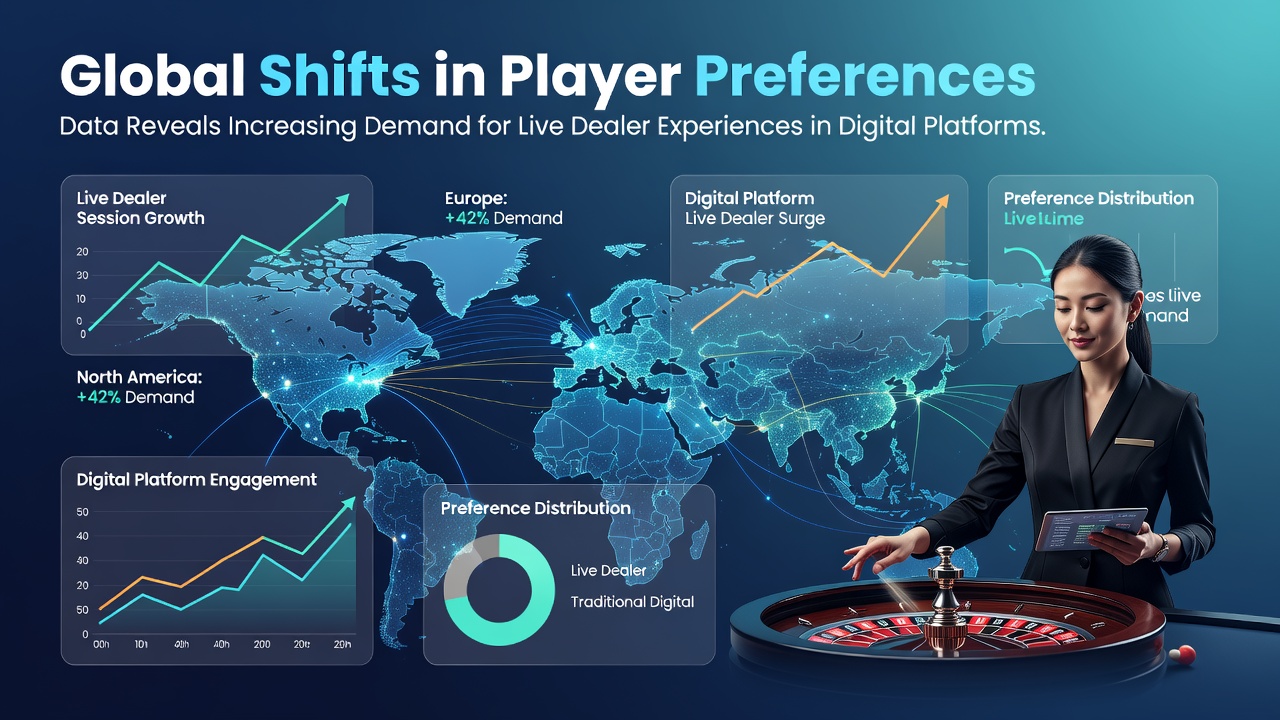
Data from multiple industry tracking services shows that participation in live dealer formats on digital platforms has risen steadily across several continents since 2023, with notable acceleration in markets where broadband infrastructure supports uninterrupted video streams. Observers note that players increasingly select these options over traditional random number generator games because the format combines visual authenticity with real-time interaction, and this pattern holds in both established and emerging jurisdictions.
Regional Data Patterns Point to Broad Uptake
European operators report that live dealer tables now account for a growing share of total gaming volume, while parallel figures from North American state regulators and Australian oversight bodies reveal similar directional movement. In Asia-Pacific territories, mobile-first platforms have introduced localized dealer teams and language options that align with time-zone preferences, which further supports session lengths. Researchers tracking these markets find that the shift coincides with improved streaming quality and wider device compatibility rather than any single regulatory change.
One study released in early 2026 by an academic group at a European university examined user behavior logs from several licensed platforms and determined that sessions featuring live dealers lasted longer on average than automated equivalents, with repeat engagement rates climbing in parallel. The same analysis highlighted that demographic groups previously underrepresented in digital gaming, including older cohorts, showed particular interest once live formats became available.
Technology and Trust Factors Driving Selection
Platform providers have invested in multi-camera angles, optical character recognition for card and chip tracking, and low-latency connections that reduce perceived distance between player and dealer. These upgrades address earlier technical friction points and allow participants to verify outcomes directly. Industry organizations such as the European Gaming and Betting Association have documented how these enhancements correlate with higher player retention metrics across member sites.
Trust metrics also appear to play a role. Surveys conducted by research firms indicate that many users cite the visible presence of a human dealer as a factor that increases perceived fairness, even when the underlying randomisation remains algorithmically certified. In June 2026, updated compliance reports from several Canadian provincial gaming authorities confirmed that live dealer offerings maintained the same or higher certification standards as their automated counterparts, removing a potential barrier for cautious participants.

Platform Adaptations and Content Expansion
Operators have responded by expanding game libraries to include regional variants such as specific Asian card games and European table classics, all delivered through the same live infrastructure. Some platforms now offer hybrid tables where players can switch between automated and live modes within a single session, reducing friction for those testing the format. Data released by the American Gaming Association shows that states with mature online frameworks experienced the fastest addition of new live dealer titles during 2025 and the first half of 2026.
Marketing approaches have shifted accordingly. Rather than generic bonus promotions, campaigns now emphasise the social and visual elements of live play, including dealer personality profiles and behind-the-scenes studio tours. These tactics align with observed user feedback that values atmosphere alongside payout potential. Cross-border operators have also introduced multi-language dealer teams to serve diaspora communities, a development tracked in reports from the Asia Pacific Association of Gaming Regulators.
Measurement Challenges and Ongoing Monitoring
While aggregate volume figures demonstrate clear growth, researchers caution that direct comparisons across jurisdictions require careful adjustment for differing regulatory definitions of what constitutes a live dealer session. Some platforms categorise certain hybrid products differently, which can affect headline statistics. Academic teams and trade groups continue to refine measurement frameworks to produce more comparable datasets over time.
Equipment suppliers meanwhile report rising orders for modular studio kits that smaller operators can deploy locally, reducing reliance on centralised facilities in high-cost locations. This decentralisation trend supports further geographic expansion and may accelerate adoption in secondary markets during the remainder of 2026.
Conclusion
Available figures from regulatory filings, platform analytics, and independent studies collectively indicate that live dealer formats have moved from niche offering to mainstream selection across digital platforms worldwide. Continued infrastructure improvements, expanded content libraries, and sustained player interest suggest the pattern will persist, although exact growth rates will depend on local licensing conditions and technological access. Monitoring bodies and research organisations continue to track these developments to maintain accurate records of evolving player behaviour.